The main points
- The route crosses Kvaløya to Sommarøy, passing fishing villages where people still live alongside the sea. The tour lasts 4.5 hours[1].
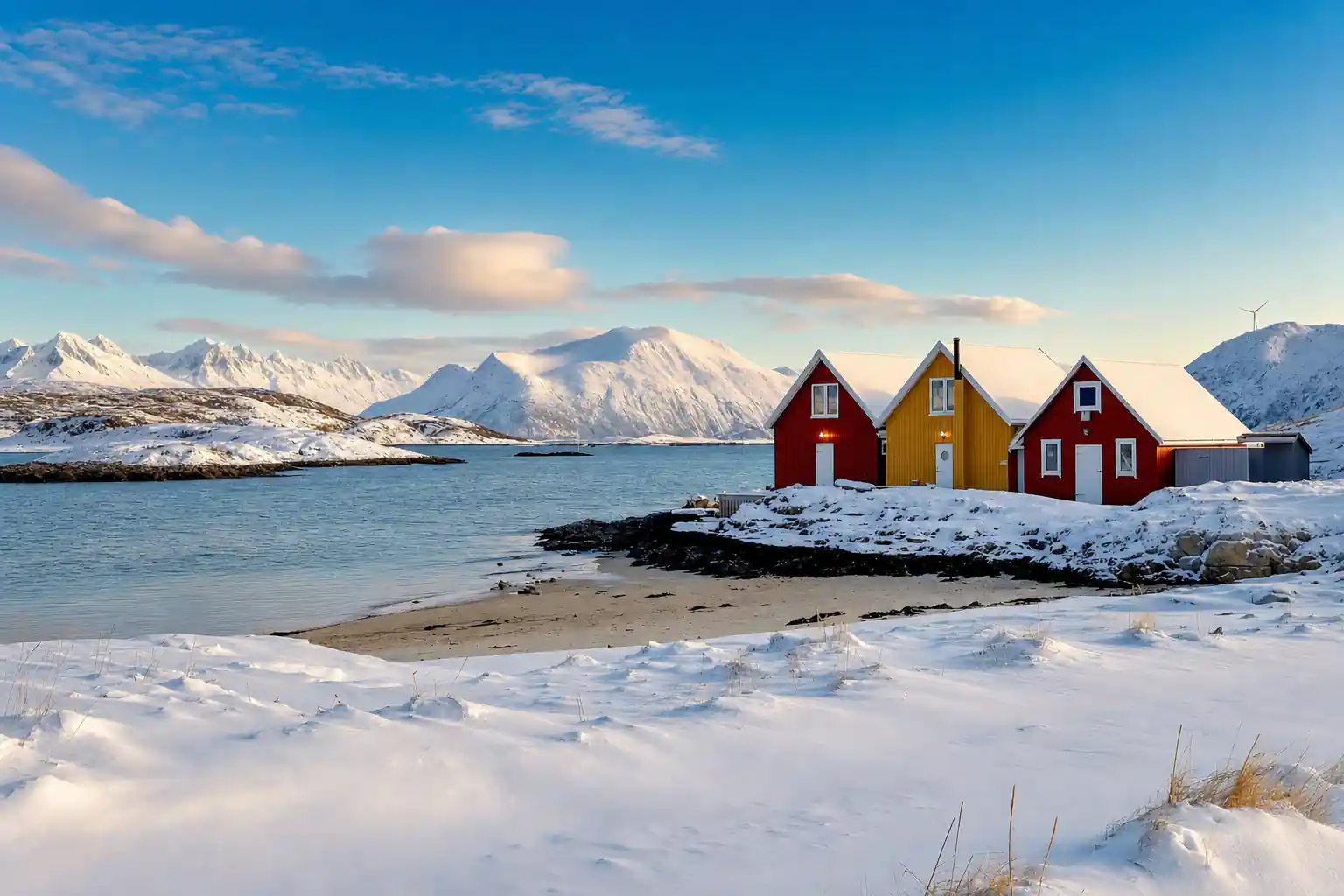
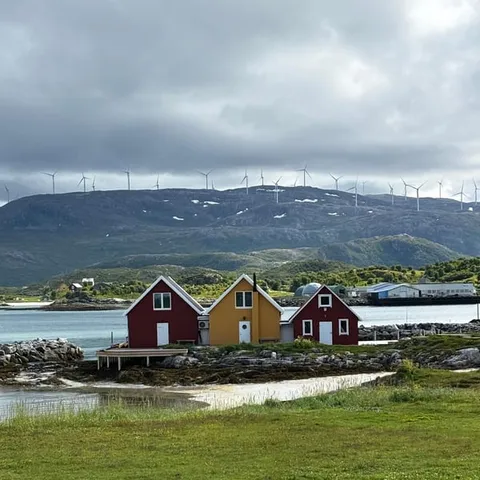
- The bright cabins you see are old and new fishermen's quarters. They sit on stilts or at the water's edge, built for easy access to boats and the catch.
- Wooden racks hold cod through the cold months. Once dried, the fish keeps for a long time, which made it a valuable export for northern Norway.
- In winter, humpback whales and orcas gather in the fjords, feeding on herring[2]. Herring move to these northern fjords from around September and October[3].
- The tour costs from US$55[1]. You may book now and pay later[1], with free cancellation accepted up to 24 hours prior[1].
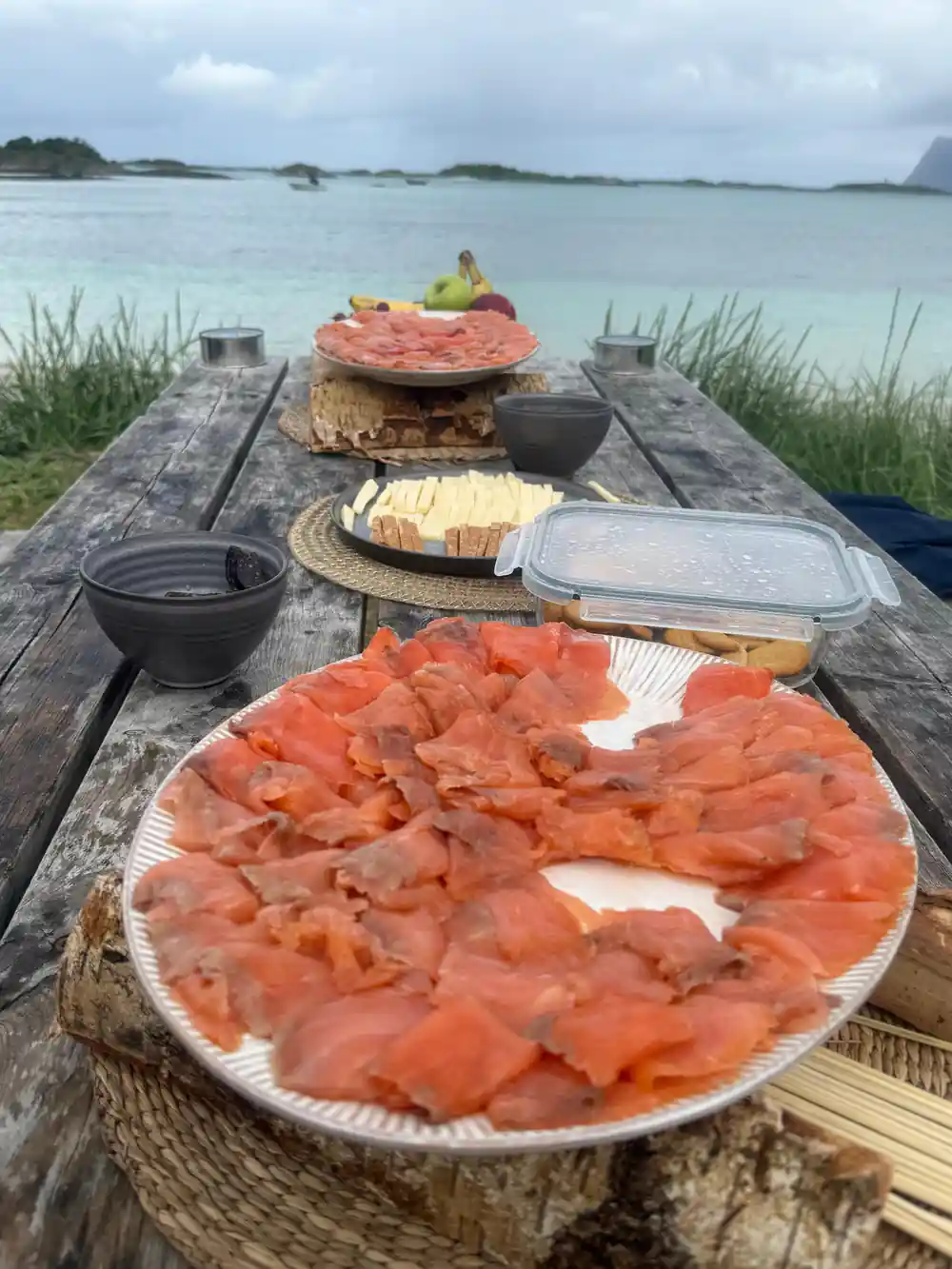
- Top choice Sommarøy Fjord Expedition from US$55 Duration4.5 hours[1]Rating4.73 from 5,005 reviews[1]GuideEnglish, Spanish[1]FeelFjord expedition with VIP salmon picnic Check availability
- Sommarøy & Kvaløya Scenic Tour from US$220 Duration6 hours[4]Rating4.81 from 247 reviews[4]GuideEnglish, Norwegian[4]FeelSmall-group scenic drive by car See this tour
- Sommerøya & Kvaløya with Lunch from US$113 Duration5.5 hours[5]Rating4.78 from 343 reviews[5]GuideEnglish, Spanish[5]FeelArctic fjords tour with lunch See this tour
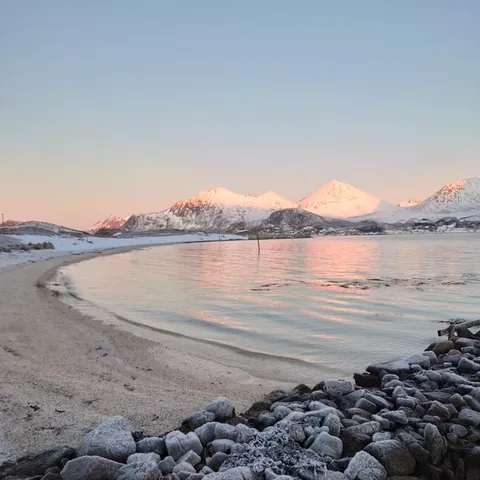
During the winter, orcas and humpback whales gather in the area to feed on herring.
A half-day window into the fjord villages
Travel there
A half-day route into a working coast
The drive west from Tromsø crosses a landscape that is less about postcards and more about survival. You leave the city behind, cross bridges and narrow roads, and soon the coast opens out into clusters of timber buildings, boathouses, and racks standing in the wind. The tour named Sommarøy Fjord Expedition Tour & VIP Salmon Picnic has a duration of 4.5 hours[1], with a live tour guide in English and Spanish along the way[1]. It is a half-day trip, easy to fit around a flight or a northern lights evening. Even in a short half-day, the quality of the light changes as the coach moves between sheltered sounds and open sea.
The route follows the old pattern of settlement: people built where they could land a boat, store gear, and keep an eye on the weather. What looks like a scenic drive is also a lesson in practical geography. You are travelling through a part of Norway where the sea has always been the main road, the main source of food, and the main reason for the villages at all. It is easy to imagine how the route looked before roads, when the same coastline was linked by boats rowing between villages.
What you are actually looking at
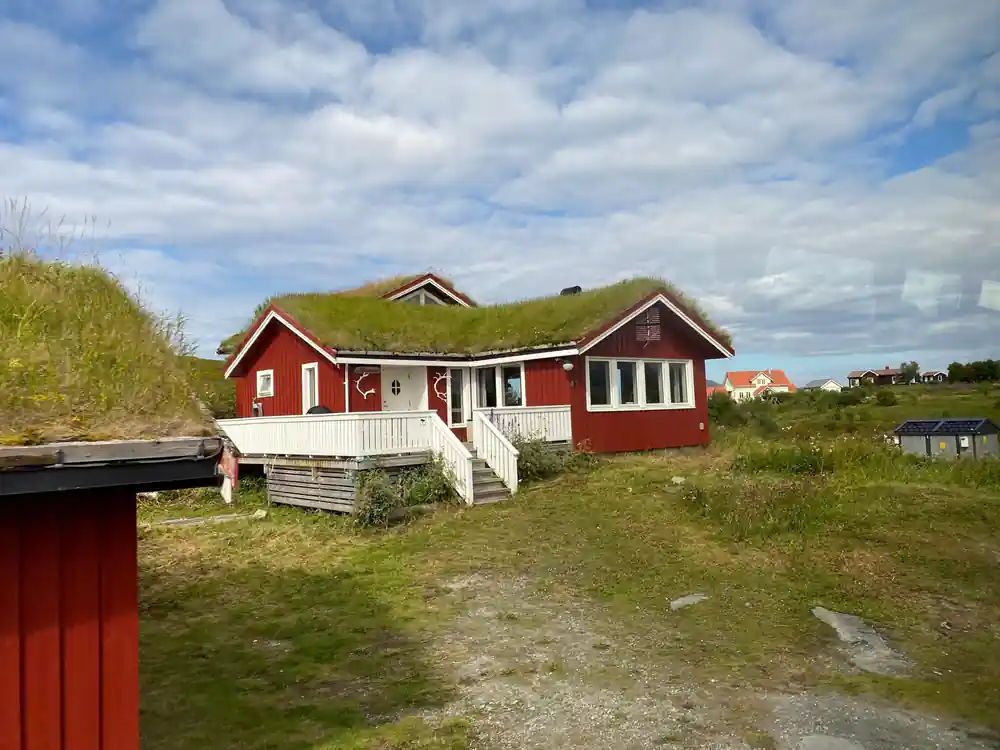
At first the fishing villages along the route can look like a collection of cottages, but each building has a job. Some are rorbu, the old seasonal cabins where fishermen slept between trips. Some are boathouses built low to the water. Others are storage sheds, repair shops, or simple homes for families who work the sea. The red paint is not just decoration. It was a cheap, durable way to protect timber in a damp climate, using iron oxide pigment mixed into oil. Practicality is written all over the coast. Look for the tiny jetties, the coils of rope, and the nets stacked under tarpaulins; they all say the same thing about how the place works.
On the tour, the guide helps you sort out what you are seeing. Before you arrive, you don't need to distinguish a boathouse from a rorbu. You just need to look at the way buildings face the water, how close they sit to the tide, and how many boats are tied up outside. By the end of the drive, the patterns become easy to read. The guide's commentary tends to match what is passing the window, and the names of fjords soon begin to feel familiar.
Red and yellow fishing cabins on a snowy shore, with the calm sea of the Sommarøy route beyond.
Why everything is painted red
The red colour in Norwegian coastal villages is so familiar that it can hide a more interesting story. Red paint was a way to make timber last longer. In an area with salt wind, rain, and long periods of cold, a coat of paint was not about looks. It was about protecting the wood and the family's most important asset: the boat, the shed, the wall between you and the weather. The paint also made a small settlement easier to see from the water, a practical trick for finding home in a snowstorm.
The same tones appear again and again. When you see a row of red or red-yellow cabins against snow, you are looking at a tradition. Some cabins are newer, some are restored, and some have faded to soft pink by the salt. The effect is a shoreline that feels warm and human, even in the middle of winter. Children build snowmen beside boathouses, and smoke rises from old chimneys.
The rorbu: fishermen's quarters
The word rorbu comes from the Norwegian words for row and cabin, and that is exactly what it was: a simple cabin near the water where fishermen could row out to their boats or to the fishing grounds. Many rorbu stood empty for much of the year and were only used during the fishing season. Today, many have been converted into holiday homes, cafés, and small museums, but the shape remains the same, low, practical, and close to the sea. They were never grand, and part of their charm is that modesty.
On the route to Sommarøy, you may see rorbu still in use as seasonal accommodation and others that look abandoned. Both are part of the story. The cabins mark places where people returned year after year because the fish came back too. That rhythm shaped the whole coast. Look for the notches cut for oars, the simple stone moorings, and the paths worn by generations of boots.
from US$55
Takes 4.5 hours with live guide in English and Spanish, audio guide, and free cancellation 24 hours in advance. Reserve now, pay later.[1]
The drying racks and Arctic cod
The wooden racks you see beside the villages are for drying cod. In the cold, dry Arctic air, whole fish can be hung and left to harden. This is the old way of preserving food before refrigeration, and it made northern Norway's catch portable. Dried cod could be traded, stored, and shipped south. The racks were as important as the boats themselves. The racks stand in exposed, well-ventilated spots where the wind can do its work.
The fishing story is tied to the seasons. In the winter, herring migrate northeastward from around September and October to wintering areas in the fjords and off the coast[3]. That brings larger wildlife with it. During winter, humpback whales and orcas gather in the area to feed on herring[2]. For anyone travelling in winter, the same waters that once fed the villages are also some of the best whale-watching waters in the region. To protect that working shoreline, Norwegian whale-watching vessels must keep at least 0.2 nautical miles (370 meters) away from fishing vessels, seines, or fixed gear.[7]
Who lives here now
These villages are not museums. People still fish, work on boats, run guesthouses, and raise families along the coast. The buildings you photograph are someone's home, workplace, or weekend cabin. Tourism has brought new life to old rorbu, but the community remains connected to the sea, the harbour, and the road that links them to Tromsø. The villages have schoolhouses, small shops, and working jetties, and the seasonal rhythm of the sea still sets the tone.
That mix of old and new is part of the charm. A village can have a shiny new hotel beside a faded drying rack. A boathouse can sit next to a modern car park. The reason anyone still lives out here is the same as it always was: the water offers work, shelter, and a particular kind of freedom. It also helps that the scenery is extraordinary, though the locals might call it ordinary life. The harbour is still the pulse of the place, even when the season is quiet.
Watching from the coach
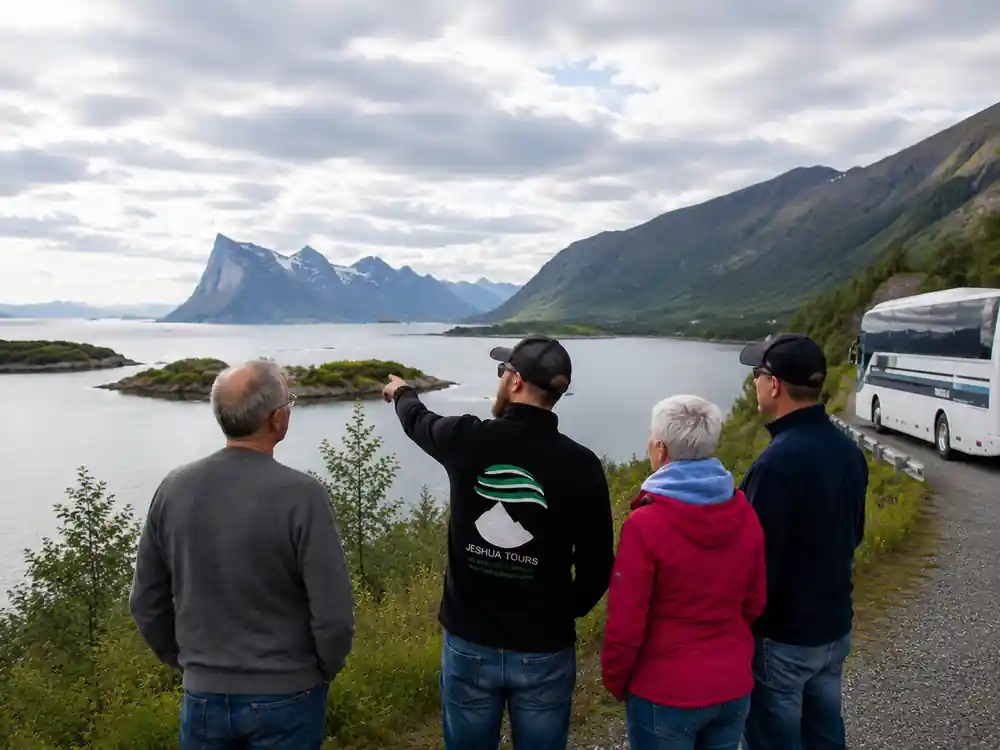
The best way to see the fishing villages is at a slower pace. The tour allows you to watch from the coach while the guide fills in the background, then get out at stops to feel the wind and hear the water. It is a balance between looking and learning. Bring your camera, but also bring questions. The story of the coast is in the details, the paint, the racks, the boats, the way people have arranged themselves around the sea. A pair of binoculars is useful, though not essential; the details along the roadside are close enough to see from a window seat.
During a winter visit, between late August and early April, dark and clear night skies can reveal the northern lights[8]; you can then combine a daytime fjord tour with an evening aurora hunt. During summer, the midnight sun is normally present from about 20 May until 22 July[9], which entirely alters the light. Whenever you go, the fishing villages along the route offer a quiet, grounded view of Arctic Norway. Each season gives the route a different temperament, and a return visit in another month can feel like a different trip.
Tour duration in hours
Compare tour prices
From-prices in US dollars per person for the three compared GetYourGuide tours.[1][4][5]
Seasonal notes
How to plan your trip
Check the tour time
The expedition lasts 4.5 hours[1], which makes it easy to pair with a morning arrival or an evening aurora hunt.
Book ahead
Prices begin at US$55[1], with the option to reserve now and pay later[1].
Know the cancellation policy
You can cancel up to 24 hours in advance for a full refund[1].
Dress for the coast
Warm layers, a windproof outer jacket, and sturdy shoes will make the stops more comfortable.
Bring curiosity
The route is richer when you know what a rorbu is and why those wooden racks stand by every village.
Enjoy the picnic
The VIP salmon picnic is part of the experience, so take your time by the water.
See the fishing villages along the Sommarøy route for yourself
from US$55Reserve now & pay later